

With gardening duties wrapping up during autumn and freezers bursting with allotment gluts and berry harvest, it must be time to follow nature’s example and ease off the gas pedal a smidge? Perhaps dust off the reading list and start planning some ‘herbal hygge’ evenings? Making potpourri may not be the first thing that springs to mind, but perhaps some context will help to boost potpourri popularity in the garden class rankings.
Potpourri from the 1980’s often comprised lurid coloured, dried offerings, doused with artificial fragrance and destined for bowls in the sitting room. However, the name pot-pourri came from 16th century France and referred to a ‘putrid’ or ‘rotten’ pot. Herbs had been used around the body and home for many years, primarily to mask the stench of unsanitary conditions, but also to repel wee beasties and serious diseases. They were known as ‘strewing herbs’. 16C pot-pourri however, was largely an amalgamation of a season’s local flora preserved and presented in a perforated ceramic pot, or in a decorative dish.
The creation of the annual ‘rotten pot’ involved harvesting petals at their peak from spring through summer, and placing them in a lidded jar until the autumn. Salt would be sprinkled in between the layers of petals to aid both fermentation and preservation. In the autumn, cinnamon, cloves and other spices were added to the mix. The fragrant product would be put in decorative bowls and garnished with fresh winter flowers. The latter would serve to hide what was possibly a rather gloopy, grey mess.
The creation of potpourri developed further during with the Victorian era with the addition of steam distilled essential oils. Flowers were meticulously dried to preserve their beauty and fragrance and essential oils added to ensure the perfume remained sharp and fresh. Rose became a firm favourite because of its ability to retain both colour and aroma.
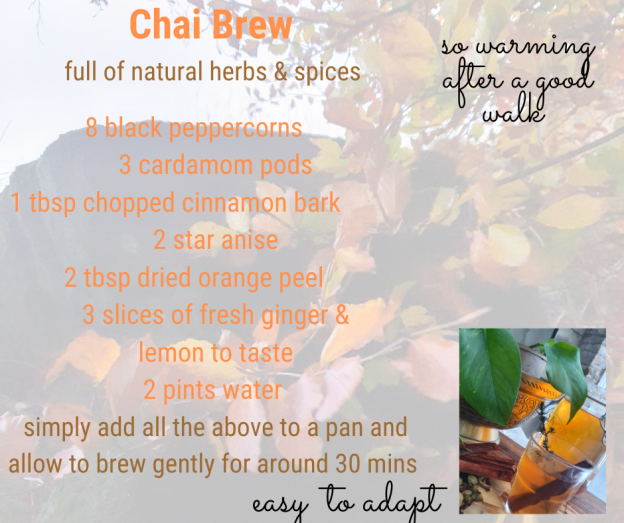
Making natural potpourri is a satisfying occupation and very possible now using our pine & larch cones sprinkled with pure essential oils blends. One of my favourite for this time of year has to be sweet orange, cedarwood and clove. If you start collecting now, wonderful aromas will be firmly established in plenty of time to mask those ubiquitous brussels sprouts! We can also achieve wonderful aromas throughout the house with ‘stove top potpourri’ and create a delicious infusion at the same time. Please try the following warming winter recipe – it can either be decocted quickly within 30 mins or left to cook gently in a slow cooker.